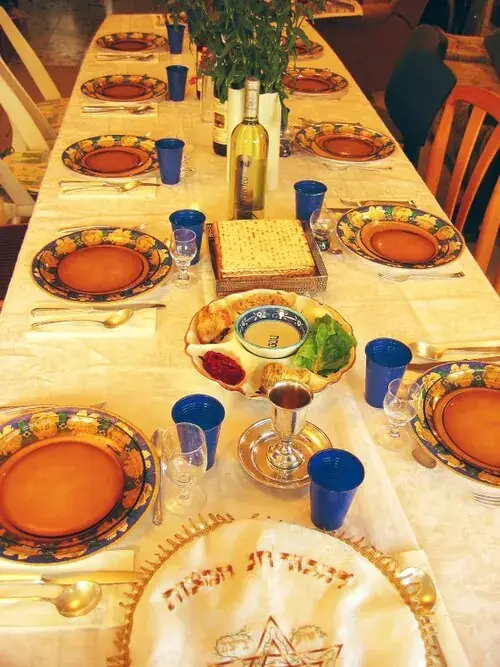
Taking a meal beneath a temporary shelter
How people live here
Sukkot links temporary booths, the harvest season, and the memory of the wilderness in Jewish tradition. Some Israeli Jewish families and communities eat and host guests in the booths, whose roofs use plant materials, and festival-related plants may also be seen. Each household's construction, decoration, and level of participation differ; Shemini Atzeret that follows has its own arrangements, and not all residents or the entire holiday period should be conflated into a single ritual.
A roof of plants above the table makes an ordinary dining space temporary and special. Walls may carry family-made decorations, and invited friends may arrive. Festival plants such as citrus and palm branches have specific ritual uses rather than being arbitrary scenery. Library resources and historical photographs show how shelters and gatherings differ across periods. Notice how people arrange hospitality and daily life within limited space, while respecting those who practice only within their families. A visible sukkah is not a visitor attraction open at any time.
Take a closer look
A shelter roof made from plant materials
A table where relatives and friends gather inside a sukkah
Citrus fruit and branches used during the festival
Look with respect
Only enter tents you are invited into or that are clearly open, and do not touch festival plants or decorations without permission; ask about the boundaries of photography, food and religious etiquette.
These accounts describe particular places and communities. Consult current local information for dates, participation rules and contemporary forms.