Narrow woven bands form a formal garment
How people live here
Aso-oke is made by Yoruba weavers in southwestern Nigeria. Narrow woven strips are joined into clothing, wraps or headwear. Yarns, colors and textures reveal skills and relate to occasions and personal taste. Historical formal dress, contemporary weddings and work by Lagos artists all keep changing the cloth through new uses.
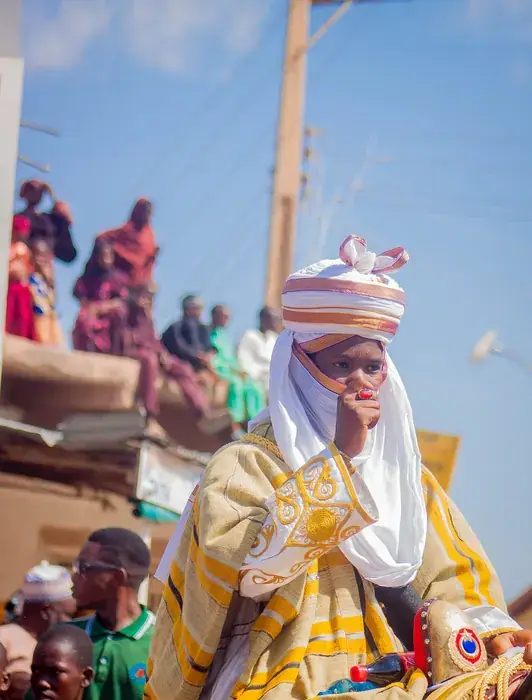
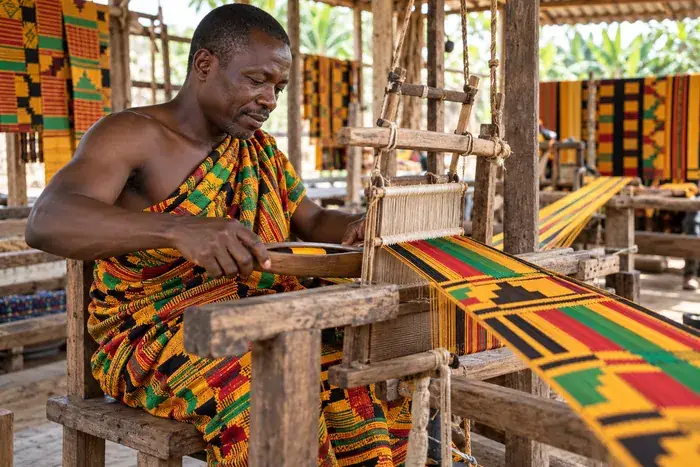
Starting from a narrow strip still on the loom makes it easier to understand how a large piece of cloth is formed. The finished strips are joined along their edges, repeated patterns meet at the seams, and the result becomes part of a wrap, a robe or a headdress. The Saint Louis Art Museum places historical women's dress and contemporary art in the same exhibition, presenting the use of aso oke across different eras. Different materials and weaves produce different luster and thickness. To recognize a cloth, there is no need to presume the wearer's identity; asking who wove it, for whom it was made and how it is worn preserves the choices of specific people.
Take a closer look
A narrow band growing gradually on a loom
Visible parallel seams in the fabric
A pattern of alternating yarn colors and textures
Look with respect
First ask whether you may touch the fabric and take photos, and don't try on someone else's ceremonial headdress; when buying, learn about the weaver, the materials and the handwork hours.
These accounts describe particular places and communities. Consult current local information for dates, participation rules and contemporary forms.